Spec Battle: Dynabook Tecra A65 M Business Laptop vs Netgear Nighthawk M7 5G Router — Is It Worth Upgrading?
In the era of hybrid work and always-on connectivity, businesses and power users must choose hardware that balances performance, security, and mobility. This article compares two very different but complementary products often considered in upgrade cycles: the Dynabook Tecra A65 M business laptop and the Netgear Nighthawk M7 5G mobile router. Rather than treating them as competitors, this spec battle evaluates whether upgrading one or both makes sense for specific real-world use cases: traveling professionals, small-office setups, field teams, and IT administrators managing mixed fleets.
Introduction: Why compare a laptop and a router?
At first glance, comparing a laptop and a router may seem like apples and oranges. However, buying decisions for business hardware are rarely made in isolation. A modern mobile workforce relies on the endpoint (the laptop) and the network (often a mobile router or hotspot). Upgrading a laptop without addressing network bottlenecks — or vice versa — can leave the user with an incomplete experience. This article examines each device on its merits, then contrasts where upgrades deliver the most return for buyers who depend on mobility, security, and productivity.
Product overviews
Dynabook Tecra A65 M Business Laptop — what it aims to be
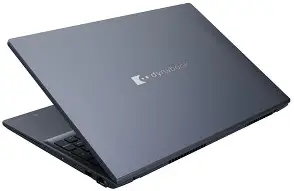
The Dynabook Tecra A65 M is positioned as a business-class laptop designed for durability, manageability, and predictable performance in enterprise environments. Buyers typically look at Tecra models for a combination of security features, a comfortable keyboard for extended typing, a variety of ports for legacy and modern peripherals, and enterprise management options that ease fleet administration.
Key themes for the Tecra A65 M are configurability and enterprise readiness: the platform is commonly offered with business-oriented CPU options, support for plentiful RAM and SSD storage capacities, and features such as TPM and BIOS-level controls. For buyers who prioritize long-term support, warranty options and modular repairability are also important considerations.
Netgear Nighthawk M7 5G Router — what it delivers
The Netgear Nighthawk M7 is a portable 5G mobile router that targets users and small teams who need high-speed cellular internet without relying on fixed broadband. The device is intended for multi-device connectivity on the go, providing a portable Wi-Fi network, Ethernet fallback, and simple management through a companion app or web UI. Its appeal lies in delivering cellular backup for offices, reliable internet for remote sites, or a dedicated mobile connection during travel.
Buyers considering the M7 are usually concerned with real-world throughput on 5G, ease of use, battery life, simultaneous client support, and the router’s ability to integrate with existing network setups—especially in scenarios where fixed-line service is unavailable, unreliable, or needs redundancy.
Detailed analysis: hardware, performance, and real-world behavior
Build quality and portability
Dynabook Tecra A65 M: The Tecra line emphasizes ruggedness and a business-appropriate aesthetic. The chassis, hinge design, and keyboard are created for daily corporate use, with attention to spill resistance and durability targets that exceed consumer-grade devices. For road warriors, a business laptop’s weight and thinness matter; the Tecra A65 M typically balances a full-featured port layout with a reasonable footprint so users can carry it between meetings without sacrificing connectivity.
Netgear Nighthawk M7: The M7 is inherently portable, designed to be carried in a bag or kept in a vehicle as a networking appliance. Its small footprint and battery-powered operation make it straightforward to deploy quickly. For field technicians and mobile offices, the M7's portability beats carrying a full router and separate modem, while still delivering Wi-Fi to several client devices.
Find top-rated Laptops & Computers products at great prices.
Browse Now →Performance and day-to-day productivity
Dynabook Tecra A65 M: For business workloads—email, spreadsheets, video conferencing, browser-heavy workflows, and light content creation—the Tecra family is tuned to deliver consistent performance. Buyers should expect snappy responsiveness with modern CPU and SSD configurations and enough RAM to keep multiple office applications and browser tabs open. For CPU- or GPU-heavy tasks (large datasets, high-end video editing, or gaming), enterprise laptops may be capable but buyers should validate CPU/GPU configuration options before upgrading.
Netgear Nighthawk M7: Real-world networking performance depends on carrier signal, plan allowances, and local 5G coverage. In strong 5G areas with an appropriate data plan, the M7 can provide broadband-like speeds suitable for cloud-based apps, video calls, and multi-user web access. However, throughput drops in marginal coverage or congested spectrum. For users whose work includes frequent data transfers or cloud backups, the M7's sustained speed under load and its handling of multiple simultaneous streams are crucial considerations.
Connectivity and expandability
Dynabook Tecra A65 M: Business users often need legacy ports (Ethernet, HDMI, USB-A) alongside modern standards (USB-C with power delivery and display alt mode). The Tecra A65 M typically includes a mix of these ports to support docking stations, external monitors, and wired network connections in conference rooms. Expandability—SODIMM slots for RAM and user-accessible storage bays—can extend usable life by making future upgrades straightforward for IT departments.
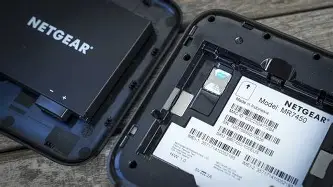
Netgear Nighthawk M7: The M7 provides multiple Wi-Fi client support and often includes Ethernet and USB interfaces for devices that do not have Wi-Fi capability or for wired backhaul. For hybrid deployments (office with primary wired internet and 5G for failover), the M7's ability to bridge or provide fallback is critical. Buyers should verify SIM slot options (physical or eSIM), the number of client devices supported, and whether the router supports advanced features like VLAN tagging or VPN passthrough if that matters for their setup.
Security and manageability
Dynabook Tecra A65 M: Security features are a cornerstone of enterprise laptops. Expect TPM (hardware encryption support), BIOS-level management controls, and optional features such as a fingerprint reader or IR camera for Windows Hello. For IT-managed fleets, central management tooling (vendor or third-party) simplifies patching, deployment, and policy enforcement—an important factor for organizations assessing upgrade value.
Netgear Nighthawk M7: Security for mobile routers centers on up-to-date firmware, strong Wi-Fi encryption, and admin access controls. For business users, the ability to run the router in a secure mode, restrict guest access, and apply firmware updates without complex procedures is important. IT teams looking to use the M7 as a secure backup link should evaluate its VPN capabilities and whether it can be integrated into existing perimeter controls.
Pros & Cons
Dynabook Tecra A65 M — Pros & Cons
- Pros:
- Enterprise-focused build quality and durability suitable for heavy daily use
- Business-class security features and management options
- Balanced port selection for docking, peripherals, and wired networking
- Upgradeable memory and storage in many configurations
- Comfortable keyboard and display options for long work sessions
- Cons:
- Not as thin or light as ultrabook-focused consumer models
- Higher initial cost compared with consumer laptops offering similar raw specs
- Configurations must be chosen carefully for specialized workloads (e.g., graphics-heavy tasks)
- Battery life varies significantly by configuration and display choice
Netgear Nighthawk M7 5G Router — Pros & Cons
- Pros:
- Fast cellular connectivity where 5G coverage is available, useful for remote or temporary sites
- Portable form factor with battery operation for flexible deployments
- Can support multiple client devices simultaneously—useful for small teams or events
- Useful as a primary connection in places without fixed broadband or as a failover/backup link
- Cons:
- Performance heavily dependent on carrier signal, plan, and local network congestion
- Monthly data costs and plan limits can make long-term use expensive for heavy data users
- Feature depth (e.g., advanced routing, VLANs) may be limited compared to enterprise-class fixed routers
- Battery life under heavy throughput may require external power for sustained use
Side-by-side comparison
| Category | Dynabook Tecra A65 M | Netgear Nighthawk M7 5G Router |
|---|---|---|
| Primary purpose | Business laptop for productivity, security, and manageability | Portable 5G router/hotspot to provide mobile internet |
| Portability | Designed for daily carry; tradeoffs between weight and ports | Highly portable; battery-powered for mobile deployments |
| Connectivity | Wi‑Fi + Ethernet, multiple USB ports, display outputs, optional WWAN depending on SKU | 5G cellular, Wi‑Fi for clients, Ethernet and USB for wired devices |
| Security & manageability | Hardware TPM, BIOS controls, support for enterprise MDM and imaging | Standard router security, firmware updates, basic admin controls; limited enterprise management |
| Use cases | Office work, video conferencing, remote workstations, managed fleets | Mobile offices, backup internet, pop-up connectivity, travel groups |
| Upgrade ROI | High if current laptops are aging, slow, or lack manageability | High if current connectivity is unreliable or fixed-line backup is needed |
Buying guide: When to upgrade, and what to check
When should an organization upgrade the Tecra A65 M?
- Existing laptops are older than three to five years, exhibiting sluggishness, failing batteries, or limited security features.
- There is a need for standardized hardware for centralized IT management and predictable warranty coverage.
- Users frequently travel or work in hybrid environments and require durable build quality and varied port options.
- There is a requirement for hardware-based security (TPM, biometric options) or hardware extensibility (RAM/SSD upgrades) to prolong lifecycle.
When should a buyer pick the Netgear Nighthawk M7?
- Reliable fixed broadband is unavailable, or there is a need for temporary or mobile connectivity (events, pop-up sites).
- Small teams need independent internet without relying on venue Wi‑Fi or suspect public networks.
- There is a need for a rapid failover solution to maintain business continuity for critical cloud services and VoIP/video calls.
- Traveling employees require a controlled mobile hotspot rather than using tethered phones with variable policies.
What buyers typically care about — checklist before buying
- Compatibility: For the laptop, ensure peripheral and docking compatibility; for the router, confirm carrier support and whether eSIM or physical SIM is preferred.
- Configuration options: Choose CPU, RAM, and storage on the laptop that match the workload; for the router, check that supported 5G bands align with the intended carrier.
- Battery life: For both devices, battery expectations should match usage patterns—hours for the laptop under office workloads, and sustained router operation if used unplugged.
- Security: Verify firmware update processes, warranty, and vendor support policies for both devices.
- Network costs: For 5G routers, evaluate data plan costs and throttling policies; heavy cloud backups or frequent large transfers can be costly on cellular plans.
- Manageability: Confirm whether the laptop integrates with existing management tooling and whether the router supports remote admin or logging required by IT.
Real-world scenarios: Practical recommendations
Scenario 1 — Traveling consultant
A solo consultant needs a capable laptop for client work, plus reliable internet at hotels and co-working spaces. Upgrading the Tecra A65 M makes sense for a comfortable keyboard, business-grade security, and expansion options. Adding a portable 5G router like the M7 is worthwhile if the consultant frequently encounters congested or insecure venue Wi‑Fi or needs a consistent connection for video calls.
Looking for the best Laptops & Computers deals on Amazon?
Browse Now →Scenario 2 — Small office with spotty fixed broadband
For a small office where fixed-line internet is unreliable, the M7 can provide dependable primary or backup internet. Upgrading laptops in the office should be prioritized if devices struggle during collaboration, but pairing new laptops with a mobile router protects productivity during outages.
Scenario 3 — Field service teams
Field technicians who need rugged, manageable endpoints and a portable network benefit from both upgrades: Tecra-class laptops for manageability and durability, paired with the M7 to ensure connectivity at remote job sites. The combination reduces failed jobs due to lack of access to cloud tools or documentation.
Cost considerations and lifecycle
Upgrading hardware always involves direct purchase costs and indirect costs (deployment, training, and maintenance). The Dynabook Tecra A65 M carries a premium for enterprise features and longer support windows; IT teams should view it as a multi-year investment with potential to reduce downtime and simplify management. The Netgear Nighthawk M7 often represents a lower upfront cost compared with fixed-line infrastructure changes but introduces ongoing cellular data expenses. For companies that prioritize uptime and mobility, the combined investment in a robust laptop and a reliable mobile router can pay dividends in reduced connectivity-related downtime and improved worker productivity.
Conclusion
Deciding whether to upgrade to a Dynabook Tecra A65 M business laptop or a Netgear Nighthawk M7 5G router depends on the user’s pain points and priorities. The Tecra A65 M is an upgrade focused on durability, security, and manageability—benefits that compound across a fleet and are highly valuable to IT-centric buyers. The Nighthawk M7 is a targeted upgrade for connectivity: it addresses mobility, redundancy, and quick-deploy scenarios where fixed broadband is inadequate or unavailable.
For many buyers, the optimal approach is complementary: invest in a reliable, serviceable business laptop for the endpoint experience, and add cellular networking where consistent internet access is critical. Organizations should weigh total cost of ownership, data plan implications, and the real-world connectivity landscape of their users before committing. Upgrades deliver the most value when they directly address existing bottlenecks—sluggish endpoints or unreliable networks—not simply for the sake of new hardware.