The Ultimate Setup Guide for Your T450Bt Wireless
Introduction
The T450Bt Wireless is positioned as a straightforward, budget-friendly on-ear Bluetooth headset designed for commuters, students, and anyone who wants a simple wireless listening experience without advanced bells and whistles. This guide walks through what buyers typically care about—sound quality, comfort, connectivity, battery life, build quality, real-world use cases—and provides step-by-step setup, practical tips, and a balanced review to help readers decide if the T450Bt Wireless fits their needs.
Product overview and analysis
The T450Bt Wireless is an on-ear design that emphasizes portability and convenience. It aims to deliver a reliable wireless connection for everyday listening: podcasts during the commute, hands-free calls while multitasking, or background music while working. Its foldable form factor and lightweight construction make it easy to stow in a backpack or tote, and basic on-headset controls simplify playback and call handling.
Design and build
The headset favors a compact, minimalist aesthetic with a focus on portability. Ear cups are typically cushioned with foam or soft leatherette and rest on the ear rather than around it, which reduces bulk but changes isolation and comfort dynamics compared with over-ear designs. The hinge and folding mechanism are practical for travel; however, buyers should check reviews for longevity if heavy daily travel or rough handling is anticipated. The materials are usually a combination of plastic and lightweight metal components to keep weight down.
Sound quality and performance
For its price segment, the T450Bt Wireless generally aims for a balanced, consumer-friendly sound signature with an emphasis on accessible low-end for pop and electronic music while maintaining clear midrange for vocal-forward content like podcasts and audiobooks. On-ear models like this often have a more intimate soundstage than over-ear headphones—this is useful in noisy environments where earbuds can get overwhelmed, but it may feel less airy for classical or highly produced recordings.
Buyers who prioritize critical listening or wide soundstage will notice limitations. However, for everyday listening—commuting, office background music, or casual home use—the clarity and punch are usually more than adequate. Sound quality also depends on the source device and Bluetooth codec support; while premium codecs provide measurable improvements, budget on-ear models often rely on standard SBC/AAC performance that remains perfectly serviceable for most users.
Connectivity and battery life
Bluetooth pairing is typically straightforward: a dedicated power/pairing button is used to make the headset discoverable, then the user selects the device from their phone, tablet, or laptop. The T450Bt Wireless prioritizes simple reconnection for daily use, and many users will appreciate the ability to switch between devices with minimal fuss.
Battery life in this category is positioned for day-to-day use—enough for commutes, a workday, or a full evening of media consumption. While exact runtime varies by usage and volume levels, these headsets are commonly designed to get through several hours of continuous playback and return to charge quickly via micro-USB or USB-C. For users who need multi-day endurance or long-haul flights, a higher-capacity or over-ear model may be preferable.
Comfort and fit
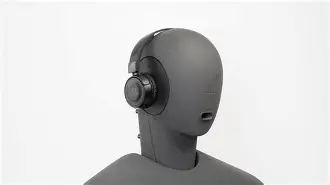
On-ear headsets such as the T450Bt Wireless balance compactness and comfort. They generally fit most head shapes reasonably well, but the pressure profile across the ear can become noticeable during long listening sessions, especially for users who wear glasses. Buyers who intend to use headphones for extended periods should trial the fit in person if possible or seek models with softer padding and adjustable clamping force.
Microphone and call quality
Integrated microphones on budget wireless headsets aim to be clear for everyday calls and virtual meetings. In typical indoor conditions, the mic will relay voices clearly enough for remote work or casual conversations. Noise suppression and wind handling are limited compared with dedicated headsets or higher-end models, so outdoor call quality near traffic or strong wind may suffer. Buyers who prioritize professional call clarity should look for headsets with advanced noise cancelling or boom mics.
Shop the latest Audio & Headphones picks on Amazon.
View Offers →Controls and usability
On-headset controls usually include play/pause, skip, volume, and call answer/end buttons. These controls are convenient for running between meetings, handling calls without touching a phone, or quickly adjusting playback. Responsiveness and tactile feedback vary by model; buyers often care about how easy the controls are to find by touch and whether button layouts prevent accidental presses when adjusting fit or removing the headset.
Pros & Cons
- Pros:
- Compact, foldable design that is travel-friendly
- Simple, intuitive Bluetooth pairing and on-headset controls
- Good value for everyday listening—podcasts, commuting, casual music
- Lightweight and easy to carry in a bag
- Cons:
- On-ear fit can cause pressure during long sessions or for glasses wearers
- Limited passive noise isolation compared with over-ear or in-ear options
- Microphone performance is adequate but not studio-grade—wind and background noise can be problems
- No advanced features like active noise cancellation or multipoint pairing in many budget implementations
How the T450Bt Wireless compares (at a glance)
| Feature | T450Bt Wireless | Wired T450 (reference) | Other budget wireless on-ear |
|---|---|---|---|
| Portability | Foldable and compact | Very compact, no battery | Often foldable; varies |
| Sound profile | Balanced, consumer-friendly | Similar; slightly clearer from wired connection | Varies; some emphasize bass, others clarity |
| Battery/Runtime | Designed for daily use (multi-hour) | N/A (no battery) | Varies; some offer extended life |
| Call quality | Good for casual calls | Depends on inline mic (if present) | Varies; some include better mics |
| Durability | Moderate; designed for light to moderate travel | Often more robust due to simpler construction | Varies; higher-priced rivals may last longer |
| Price segment | Budget / value | Lower (no wireless components) | Budget to mid-range |
Real-world use cases
Understanding how the T450Bt Wireless performs in practical scenarios helps buyers match the product to their needs:
- Daily commuting: The headset is ideal for short to medium commutes, offering decent sound and the convenience of hands-free calls. Its foldable design makes it easy to store between rides.
- Work-from-home or office use: For virtual meetings and background music, the T450Bt handles basic voice calls well. It is not a substitute for a dedicated conferencing headset but is perfectly adequate for most casual office needs.
- Exercise and active use: The on-ear design is not optimized for heavy sweating or vigorous workouts. For running or gym sessions, more secure in-ear or sport-specific wireless models may be a better fit.
- Travel and short flights: Portable and lightweight, the headset suits short plane trips or waiting room use. For long-haul flights, buyers who prioritize comfort and isolation might prefer larger over-ear models with active noise cancellation.
- Casual home listening: Great for background listening while cooking, tidying, or casual playback of playlists and podcasts.
Buying guide: what to look for
When choosing a T450Bt Wireless or a similar on-ear wireless headset, consider these key factors.
1. Intended use
Start with the primary scenarios in which the headset will be used. Commuters benefit from portability and solid battery life; remote workers prioritize mic quality and comfortable fit; gamers may care more about low-latency connections. Match the headset to the main use case rather than buying on price alone.
2. Comfort and fit
Try to evaluate clamp force and earpad material. Softer pads and adjustable headbands reduce discomfort during longer sessions. People who wear glasses should pay attention to user feedback on pressure and rim contact.
3. Sound signature
Decide whether an emphasized bass (for pop and hip-hop) or a neutral response (for podcasts and mixed genres) is preferable. On-ear headphones often sound punchy due to proximity to the ear, so expect a personal, forward presentation.
4. Microphone and call performance
If calls are a priority, look for headsets with clear mic performance and basic noise suppression. Read user reviews focused on call quality in real environments (office, street, wind) rather than controlled lab tests.
5. Battery and charging
Check the expected battery life and charging method. USB-C is more convenient and future-proof than micro-USB, and quick-charge capabilities can be very useful for last-minute top-ups. Consider whether the headset supports a wired connection as a fallback if the battery dies.
Find top-rated Audio & Headphones products at great prices.
See Deals →6. Connectivity features
Look for multipoint pairing if switching between phone and laptop is frequent. Also verify codec support (AAC, aptX, SBC) if higher-fidelity Bluetooth streaming is a concern; budget models often default to standard codecs but still deliver good everyday performance.
7. Build quality and warranty
Assess materials and hinge robustness, especially for frequent travelers. A clear warranty and accessible customer support make a tangible difference in long-term ownership experience.
8. Extras and practical considerations
Consider included accessories (carrying pouch, extra cables), on-device controls, and how easy it is to replace earpads if they wear out. Also evaluate how the headset interacts with the intended devices, like laptops or smart TVs, and whether latency is acceptable for video consumption or gaming.
Setup and pairing: step-by-step
Setting up most Bluetooth on-ear headsets follows a similar process. The steps below are general and applicable to the T450Bt Wireless family of devices:
- Charge first: Fully charge the headset before initial use to condition the battery and ensure maximum first-run uptime.
- Power and pairing mode: Power on the headset and press and hold the pairing button (often combined with the power button) until an LED indicator flashes or an audible tone confirms pairing mode.
- Enable Bluetooth on the source device: Open Bluetooth settings on the phone, tablet, or computer and scan for nearby devices. Look for the headset name (e.g., "T450Bt" or similar). Select it to pair.
- Confirm connection: A confirmation tone or LED color change usually indicates a successful connection. Test audio playback and call handling to verify functionality.
- Re-pairing and multipoint: To connect to a second device, disconnect and repeat the pairing steps, or follow the headset manual for multipoint sequence if supported. Some devices store multiple pairings and re-establish connections automatically when in range.
- Fallback wired connection: If the headset supports an auxiliary cable, use it when battery life is low or when connecting to devices without Bluetooth.
Troubleshooting common issues
Several common issues can be resolved with quick checks:
- No sound after pairing: Confirm the headset is selected as the audio output device on the source and that volume is up on both devices.
- Intermittent audio drops: Reduce distance and remove obstructions between headset and source; Bluetooth performance can be affected by walls, pockets, or other wireless signals.
- Low call volume or muffled mic: Ensure the mic is unobstructed, and check in-call volume settings on the device. Avoid windy areas or use an indoor environment for important calls.
- Battery drain: Disable unused connections, power the headset off when not in use, and avoid leaving it in high-temperature conditions.
Conclusion
The T450Bt Wireless is a practical choice for buyers seeking an uncomplicated, portable wireless headset for everyday listening and casual calls. Its strengths are portability, ease of use, and value—qualities that make it appealing to commuters, students, and those who want reliable wireless audio without premium pricing. Limitations—such as on-ear comfort during very long sessions, modest noise isolation, and basic microphone performance—are typical for this category and should be weighed against specific needs like studio-level audio, prolonged travel comfort, or professional call clarity.
Ultimately, the T450Bt Wireless is best considered as a convenient daily-driver: compact, easy to pair, and tuned for general use rather than audiophile pursuits. For those who prioritize portability and straightforward Bluetooth performance at an accessible price point, it represents a solid, no-nonsense option. For users with more specialized needs—extended battery life, advanced ANC, or studio-grade microphones—evaluating higher-tier alternatives would be prudent.